
Little Black Ants in Middle Georgia: Stopping Scavengers
Understanding Little Black Ants in Middle Georgia
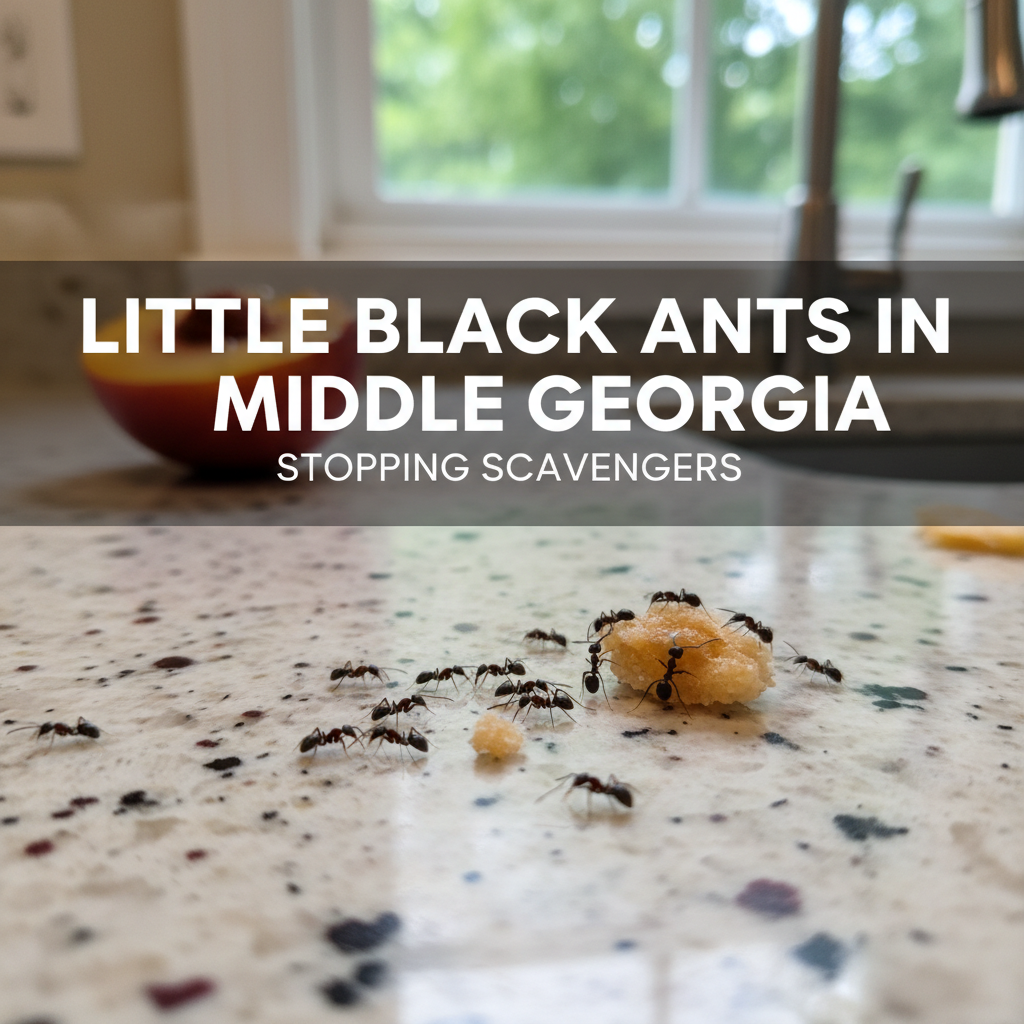
Middle Georgia offers a warm, humid climate that humans and pests alike adore. Unfortunately, this climate also creates the ultimate haven for various crawling critters, most notably the tiny little black ant. [IMAGE: A close-up of little black ants foraging on a kitchen counter] Measuring only about one-sixteenth to one-eighth of an inch long, these glossy, dark-colored insects often go unnoticed until they appear in massive numbers. If you have ever spotted a faint, moving line of miniature bugs marching toward a stray crumb on your kitchen counter, you are likely dealing with these persistent household scavengers.
Why Are They Invading Your Home?
Little black ants are constantly on the hunt for resources to sustain their rapidly expanding colonies. During the scorching Middle Georgia summers or heavy seasonal rains, these pests frequently seek refuge indoors. Your home provides an ideal combination of moisture, stable temperatures, and an endless supply of food. Whether it is a sugary spill near the coffee maker or a greasy residue left on a dinner plate, little black ants will sniff it out with impressive precision.
What Attracts Little Black Ants?
To successfully stop an invasion, you first need to understand what draws these tiny bugs inside your living space in the first place. Their diet is surprisingly versatile, meaning almost anything in your pantry can act as a welcome mat.
- Sweet substances like honey, syrup, fruit juice, and spilled soda.
- Greasy or protein-rich foods, including meats, cheese, and oils.
- Unsealed garbage containers and pet food bowls left out overnight.
- Excess moisture around leaky pipes, bathrooms, and damp basements.
Practical Steps to Stop the Invasion
Getting rid of a little black ant infestation requires a strategic approach rather than just squashing the ones you see. Because these colonies often feature multiple queens, simply eliminating the visible worker ants will barely scratch the surface.
Seal Entry Points
Start by making your home as unwelcoming as possible from the outside. Inspect your foundation, windows, and doors for cracks or gaps. Use a quality silicone caulk to seal any potential entry points. Additionally, make sure window screens fit tightly and weather stripping is intact.
Maintain Absolute Cleanliness
Denying them food is one of the most effective deterrents. Wipe down kitchen counters daily, store pantry goods in airtight glass or plastic containers, and clean up sticky spills immediately. Do not leave dirty dishes lingering in the sink, and sweep up stray crumbs from dining areas regularly.
Deploy Targeted Baits
If you already have an active indoor trail, resist the urge to spray them with standard surface cleaners right away. Sprays often kill only the workers and cause the rest of the colony to scatter. Instead, use slow-acting liquid ant baits placed near the active trails. The worker ants will consume the bait, carry it back to share with the queen and the rest of the colony, and help wipe out the infestation at its source.