
Fire Ants in Middle Georgia: What You Need to Know
Living in Middle Georgia comes with plenty of perks, from the warm, sunny weather to the rich Southern hospitality. However, our charming region also shares its ecosystem with one of the most persistent and aggressive pests known to the American South: the red imported fire ant. These tiny terrors are more than just a minor nuisance during backyard barbecues; they pose a genuine threat to your family’s health, your pets, and even the structural integrity of your property. Understanding how to identify, manage, and prevent fire ant infestations is essential for every homeowner in the area.
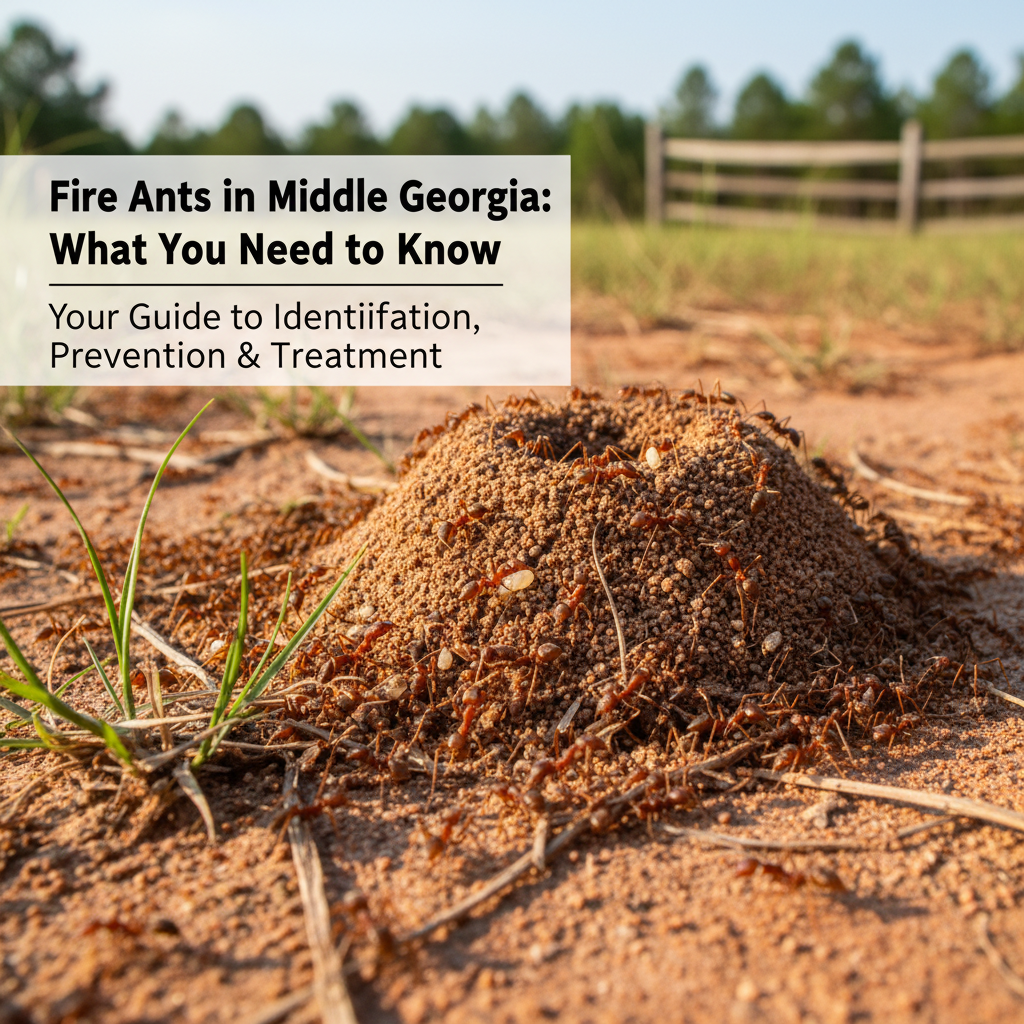
[IMAGE: A close-up view of a large fire ant mound in a lush green Georgia lawn.]
Understanding the Threat
Fire ants are notorious for their painful stings, which often leave victims with itchy, pus-filled pustules that can take weeks to heal. Unlike native ant species, fire ants are fiercely defensive. If you accidentally disturb a mound while mowing the lawn or weeding your garden, hundreds of workers will swarm upward in a matter of seconds, biting to get a grip and delivering a fiery sting simultaneously.
Health Risks for Family and Pets
For young children and household pets who may not understand the danger, stumbling upon a hidden nest can result in dozens of stings. In severe cases, individuals with specific insect allergies can experience anaphylactic shock, a medical emergency requiring immediate intervention. Pets are equally vulnerable, often suffering stings on their sensitive noses and paw pads while investigating yard mounds.
Damage to Your Home and Property
Beyond the physical pain they inflict, fire ants can wreak havoc around your home. These resilient insects frequently nest near electrical equipment, utility boxes, and air conditioning units. Their underground tunneling can undermine walkways, driveways, and patio slabs, leading to costly property damage over time.
[IMAGE: A homeowner inspecting an outdoor air conditioning unit surrounded by fire ant activity.]
Agricultural and Gardening Impacts
Gardeners in Middle Georgia know all too well how these pests can decimate a thriving landscape. Fire ants feed on germinating seeds, girdle young tree trunks, and protect honeydew-producing insects like aphids, which in turn damage ornamental plants and homegrown vegetables.
Effective Management Strategies
Combating fire ants requires a strategic approach rather than a haphazard response. Simply kicking a mound or pouring boiling water on it usually only serves to scatter the colony, causing them to establish multiple new nests nearby.
The Two-Step Method
Pest control professionals generally recommend the proven two-step method for long-term control:
- Baiting: Apply slow-acting baits across your lawn in the spring or fall. Worker ants take the bait back to the queen, effectively eliminating the source of the colony.
- Individual Mound Treatment: Treat specific, nuisance mounds with approved liquid drenches, dusts, or granular insecticides for quick knockdown.
Conclusion
Fire ants in Middle Georgia are an unwelcome reality, but they don’t have to overrun your outdoor living spaces. By staying vigilant, protecting your loved ones, and implementing a consistent pest management routine, you can reclaim your yard and keep your home safe from these aggressive invaders.