

Mud Tubes & Shed Wings: Spot Early Termite Signs in Atlanta
Mud Tubes, Shed Wings & Soft Wood: Atlanta’s Early Warning Signs of Termite Activity
Termites are one of the biggest nightmares for homeowners in Atlanta. Known for their stealthy behavior and destructive capabilities, these pests can cause severe structural damage before even being detected. Recognizing the early-warning signs of termite activity is crucial in preventing extensive damage and costly repairs. This post will explore three primary indicators that termites might be lurking in or around your Atlanta home.
Mud Tubes: The Termite Highways
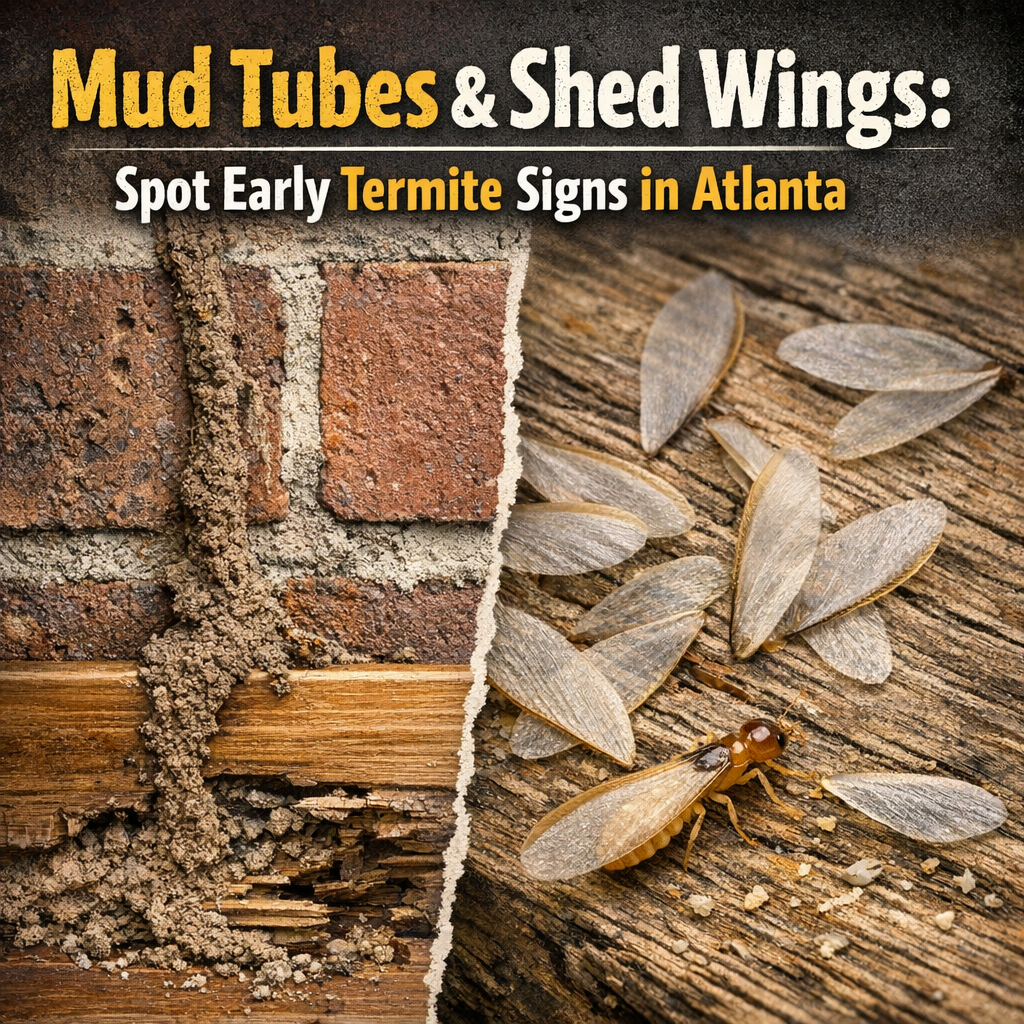
Termites are not exactly fans of the open air. They prefer humid, protected environments, which is why they build what are known as mud tubes. These tubes serve as protective highways from their underground colonies to their food sources — your home.
How to Spot Them
Look around the foundation of your house, nearby wooden structures, or even along the walls. Mud tubes are about the size of a pencil and often appear to be randomly constructed, snaking across material surfaces. If you break a tube open and find it repaired within a few days, it’s a sure sign of active termites.
Shed Wings: A Telltale Sign of Swarmers
In early spring, typically after a rain shower, termites send out swarms to start new colonies. After swarming, these termites shed their wings. Finding these discarded wings can be an unequivocal sign of nearby termite proximity.
Where to Find Them
Window sills and doorways are common places where you might find these wings, as swarmers are attracted to light. They resemble small fish scales, translucent and all roughly the same size and shape.
Soft Wood: Silent but Deadly
Termites consume wood from the inside out, often leaving only a thin veneer of wood or paint. Over time, this can lead to visibly noticeable damage, but there are earlier signs you can catch.
Detection Tips
Soft wood in your home can sometimes be detected by pressing against it with a solid object, like a screwdriver. If it feels spongy or breaks easily under slight pressure, it could be due to termite damage. Another clue might be a hollow sound when you tap on what should be solid wood.
What to Do If You Notice These Signs
If you observe any of these warning signs in or around your Atlanta home, it’s important to take immediate action.
- Confirm the presence: Before jumping to conclusions, ensure that the signs you’re seeing are indeed due to termites.
- Contact a professional: Termite removal is not a DIY job. Professional pest control services can assess the extent of the issue and recommend the best treatment methods.
- Regular inspections: Prevent future infestations by scheduling regular inspections and treatments with a trusted pest control professional.
- Address moisture issues: Since termites thrive in moist environments, fixing leaks and ensuring proper drainage around your home can help deter them.
Preventing Termite Infestations
Being proactive can save you from the headache and financial strain of dealing with a full-blown termite infestation. Here are a few preventative steps:
- Remove wood contacts: Ensure that any soil around your house has minimal contact with wood, especially near the foundation.
- Store firewood properly: Keep firewood stacked away from your home and off the ground.
- Trim vegetation: Keep trees and shrubs trimmed back from the house to avoid direct pathways for termites.
- Seal entry points: Regularly inspect your home for cracks in the foundation and around utility lines and seal them.
By keeping an eye out for signs of termites such as mud tubes, shed wings, and soft wood, and by taking preemptive measures, you can protect your Atlanta home from the silent destructiveness of termites. Remember, early detection and professional intervention are key to managing these pest invasions effectively.