
Drywood Termites: How ‘The Paratrooper’ Infests Attics Without Soil
Drywood Termites in Attics: How ‘The Paratrooper’ Infests Without Touching Soil
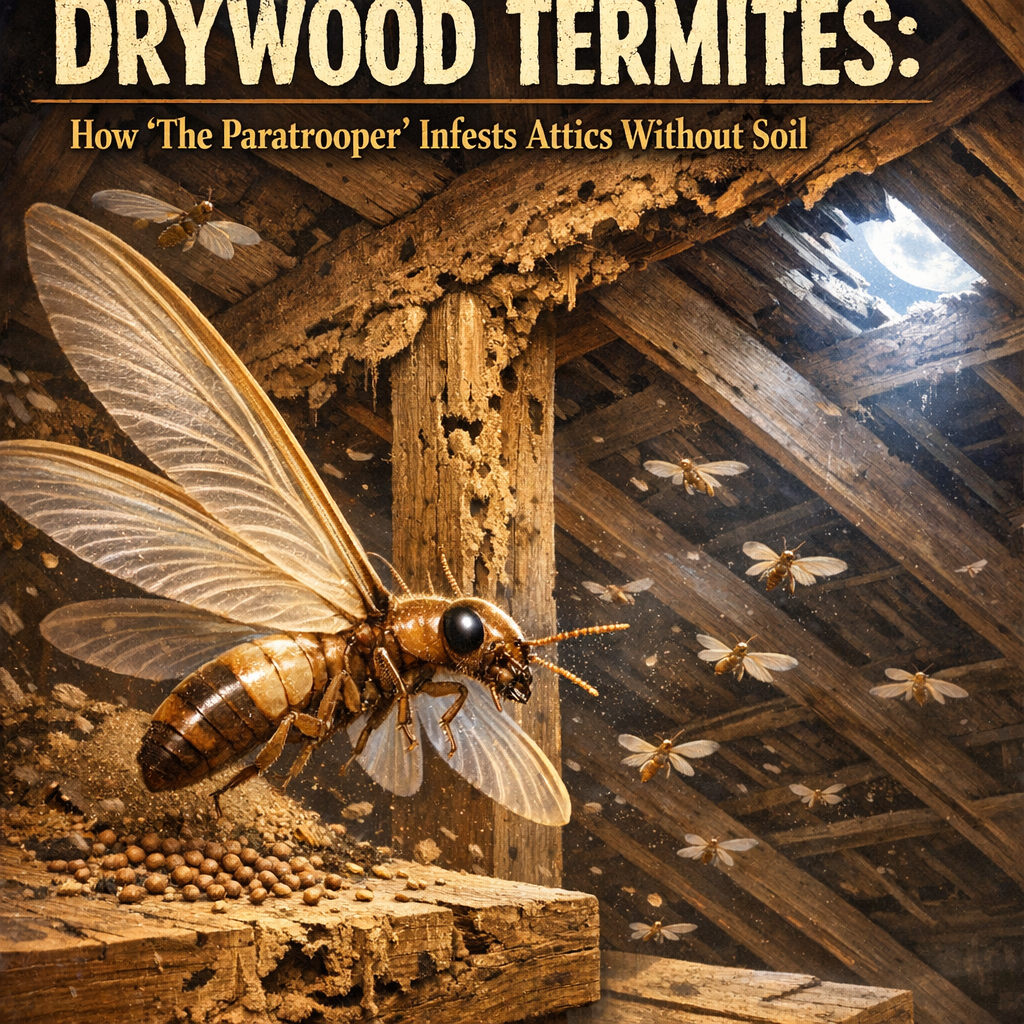
Drywood termites, often referred to as ‘The Paratroopers,’ are a particular species of termite that thrives in dry wood without any contact with the soil. These termites are notorious for their ability to infest attics and wooden structures, leading to significant structural damage if not detected and managed timely. Understanding their behavior, identifying infestation signs, and adopting effective control measures is essential for homeowners.
Understanding Drywood Termites
Unlike subterranean termites that require contact with the soil to maintain their moisture levels, drywood termites extract the moisture they need from the wood they consume. This unique trait allows them to dwell in dry conditions such as attics, where they can go unnoticed for years.
Key Characteristics of Drywood Termites:
- Habitat: They live inside wood, including furniture, hardwood floors, and framing.
- Appearance: Typically larger than their subterranean counterparts, they can be identified by their reddish-brown color.
- Colonies: Smaller than those of other termite species, but can cause just as much damage due to their ability to spread across different areas of a home.
Identifying Signs of Infestation
Early detection of drywood termites is crucial in preventing extensive damage. Homeowners should regularly check for these indicators to catch infestations early.
Common Signs Include:
- Frass: This termite produces wood-colored droppings as they consume wood, which often accumulate on surfaces below infested areas.
- Hollow sounding wood: As termites consume wood from the inside out, affected areas may sound hollow when tapped.
- Discarded wings: Swarmers from the colony may leave discarded wings near windows or doors, signaling a potential indoor infestation.
The Life Cycle of ‘The Paratrooper’
Drywood termites have a unique life cycle that allows them to spread quickly and efficiently, earning them the nickname ‘The Paratrooper.’
Stages of Their Life Cycle:
- Swarming: New kings and queens swarm from existing colonies to mate and establish new colonies.
- Colonizing: After swarming, the mated pairs shed their wings and select suitable pieces of wood to start their colony.
- Growth: The queen lays eggs which develop into workers and soldiers. There is no distinct worker caste in drywood termite colonies, as immature termites carry out those duties.
Preventive Measures and Control
Preventing an infestation is more manageable and less costly than dealing with an established colony. Employing both preventive measures and effective treatment options is the best strategy for managing drywood termite problems.
Prevention Tips:
- Regular inspections: Conduct thorough inspections of your home’s attic and other wooden structures annually.
- Seal entry points: Fill cracks in the exterior woodwork to prevent termites from entering.
- Proper ventilation: Ensure that your attic is well-ventilated to reduce moisture levels that can attract termites.
Treatment Options:
- Spot treatments: If infestation is limited, localized treatments can be applied.
- Fumigation: For extensive infestations, whole-house fumigation may be necessary to eradicate all colonies.
- Wood replacement: Severely damaged wood should be removed and replaced to prevent reinfestation.
Conclusion
Drywood termites, or ‘The Paratroopers,’ pose a unique challenge due to their ability to infest homes without contact with the soil. By understanding their behavior, regularly checking for signs of infestation, and applying preventive measures, homeowners can protect their property from these silent invaders. Always consider consulting with a professional pest control service to effectively manage and eliminate drywood termite infestations.