
Atlanta Termite Activity: Early Signs Including Mud Tubes & Shed Wings
title: “Mud Tubes, Shed Wings & Soft Wood: Atlanta’s Early Warning Signs of Termite Activity”
description: Detect early signs of termite activity in Atlanta and protect your home from severe damage with these essential tips.
Introduction
In Atlanta, the warm and humid climate provides a perfect breeding ground for termites, making it crucial for homeowners to stay vigilant against these destructive pests. Recognizing the early signs of termite activity can save your structure from extensive damage and expensive repairs. Here’s how to spot the warning signs of termites in your home.
Understanding Termites in Atlanta
Termites thrive in the warm, moisture-rich environment that Atlanta offers. These pests primarily feed on cellulose, a major component in the structure of your home, making them a formidable enemy to wood-based structures.
Types of Termites
- Subterranean Termites: Most common in Atlanta, these termites build notorious mud tubes for movement and moisture retention.
- Drywood Termites: Less dependent on soil, these termites live directly inside wooden structures.
Spotting Early Signs of Termite Activity
Detecting termites early can prevent them from causing irreversible damage to your home. Below are key indicators of termite activity that every homeowner should be aware of.
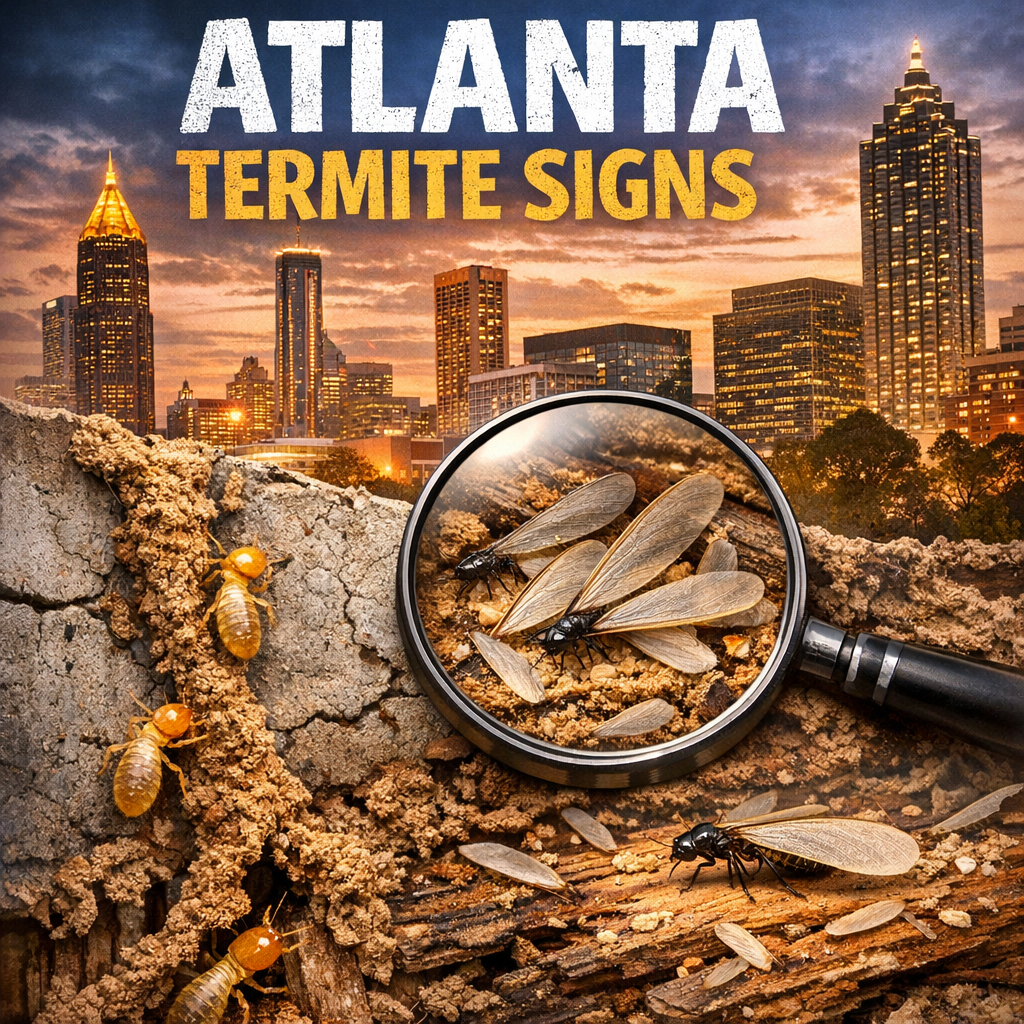
Mud Tubes
- Structure: Look for pencil-sized tubes along your home’s foundation, walls, or crawl spaces.
- Function: These tubes protect termites from predators and provide a moist environment.
Action: Breaking a mud tube and checking for active termites can help determine if an infestation is ongoing. If the tube reappears after being damaged, it’s a clear sign of active termites.
Shed Wings
- Appearance: Small, translucent wings, often found near windowsills or doors.
- Explanation: Termites shed their wings after finding a suitable place to colonize. This often happens during or after a swarm.
Action: Collecting these wings and comparing them to pictures online can help verify if they belong to termites.
Soft Wood
- Symptoms: Wood that sounds hollow when tapped, visibly sagging doors or floors, and wood that breaks easily upon slight pressure.
- Implication: As termites consume wood from the inside out, affected areas begin to weaken structurally.
Action: Regular probing of suspect wood with a screwdriver can help uncover hidden termite activity.
Preventative Measures and Solutions
Being proactive is your best defense against termites. Here are some expert tips to safeguard your home:
Reduce Moisture
- Ensure good ventilation in crawl spaces, attics, and basements.
- Fix leaks immediately, from roofs to plumbing.
- Direct water away from your home’s foundation with properly functioning downspouts, gutters, and splash blocks.
Regular Inspections
- Schedule annual termite inspections with professionals, especially if living in high-risk areas like Atlanta.
- Consider installing termite monitoring stations around your home as an early detection tool.
Professional Treatment Options
- Liquid Termiticides: Trench and treat methods to create a chemical barrier around your home.
- Baiting Systems: Stations that attract termites and then kill them with a slow-acting poison which they carry back to the colony.
Conclusion
Recognizing the early warning signs of termite activity, such as spotting mud tubes, finding shed wings, or noticing soft wood, can significantly mitigate the damage these pests can do to your Atlanta home. Early identification combined with professional eradication strategies and preventive measures can save you from the hefty costs associated with termite damage repair. Stay vigilant and protect your home by keeping an eye out for these telltale signs of termite presence.