
Why Different Flies Behave Differently in Middle Georgia
Middle Georgia is known for its warm climate, lush landscapes, and southern charm, but it is also famous for its buzzing insect population. When the weather heats up, residents often notice an influx of flying pests around their homes, yards, and farms. However, not all pests are created equal. If you have ever wondered why house flies, drain flies, and horse flies act so differently, the answer lies in their unique biology, breeding habits, and evolutionary survival strategies across the Peach State.
The Ubiquitous House Fly: A Persistent Household Invader
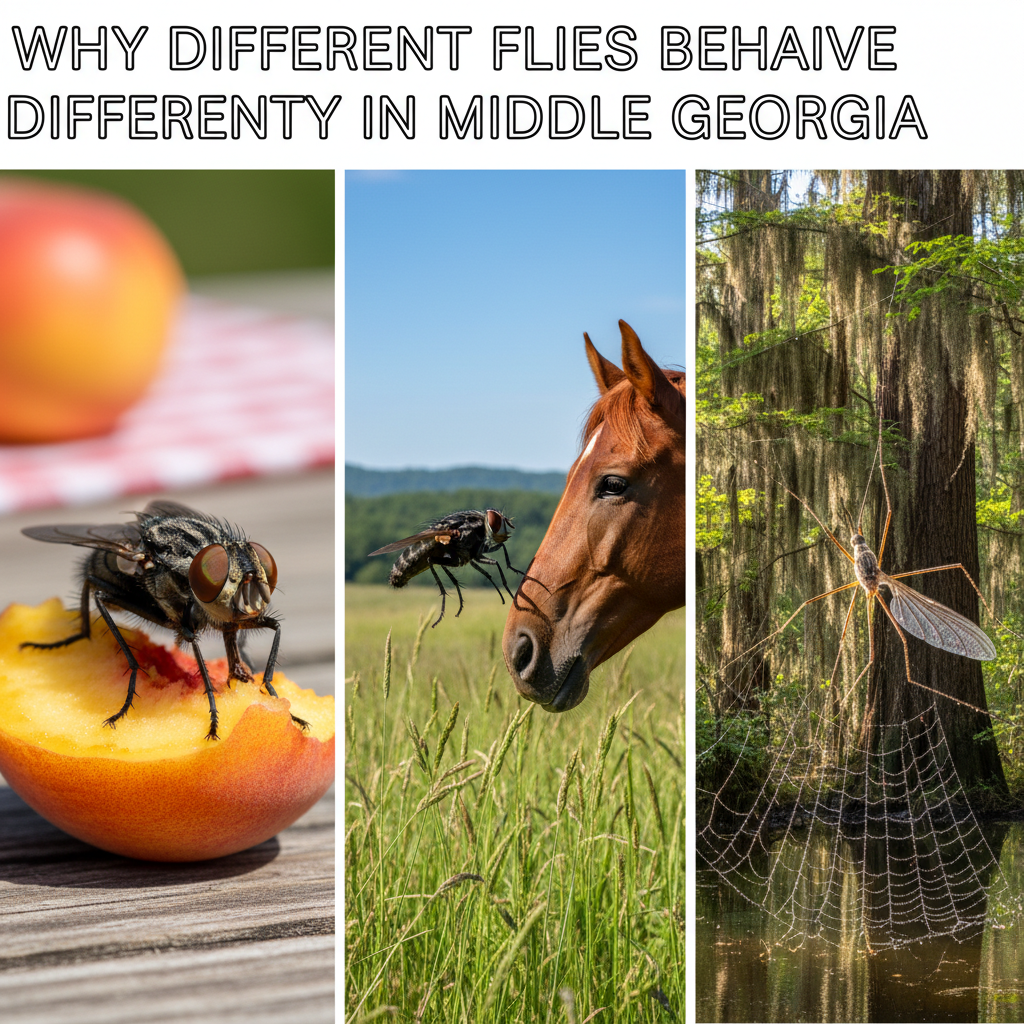
The common house fly is perhaps the most familiar nuisance in Middle Georgia. These insects are synanthropic, meaning they live in close association with humans. Unlike other pests that hide in deep vegetation or damp sewers, house flies are drawn indoors by the scent of food, garbage, and warmth.
Why House Flies Act the Way They Do
House flies are relentless explorers. They lack teeth and cannot bite, so they feed by liquidizing solid food through regurgitation. This is why they constantly land, taste surfaces with their feet, and take off again. Their erratic flight patterns and rapid reflexes make them notoriously difficult to swat. In Middle Georgia’s humid climate, house flies multiply rapidly, completing their life cycle from egg to adult in under two weeks if conditions are right.
Drain Flies: The Tiny Dwellers of Damp Indoor Spaces
If you spot tiny, fuzzy, moth-like insects hovering around your bathroom sink or kitchen drain, you are likely dealing with drain flies. Unlike house flies, which travel long distances across neighborhoods, drain flies tend to stay close to their birthplace.
Understanding Drain Fly Behavior
Drain flies are weak flyers. Instead of darting across the room, they prefer to hop short distances or cling to walls near moisture sources. Their behavior is entirely dictated by organic sludge and biofilm buildup inside pipes. Female drain flies lay their eggs directly in this gelatinous gunk, which serves as a food source for the hatching larvae. In Middle Georgia homes, high humidity can exacerbate plumbing condensation, creating prime real estate for these harmless yet annoying pests.
Horse Flies: The Aggressive Outdoor Biters
Switching gears from indoor nuisances to outdoor terrors, the horse fly is a completely different beast. Found near ponds, pastures, and wooded trails throughout Middle Georgia, these large, intimidating insects can turn a peaceful afternoon hike into a stressful experience.
The Aggression of Horse Flies
Unlike house flies and drain flies, female horse flies require a blood meal to develop their eggs. Their behavior is driven by aggressive hunting. They rely heavily on sight, movement, and carbon dioxide to track down large mammals like horses, cattle, and humans. When they bite, they do not just pierce the skin; they use scissor-like mouthparts to slash it, making their bites notoriously painful. They care little about indoor spaces and prefer bright, open, sunlit outdoor environments.
Managing Flies in Middle Georgia
Because house flies, drain flies, and horse flies behave so differently, getting rid of them requires tailored approaches:
- House Flies: Focus on tight-fitting garbage lids, food storage, and sanitation.
- Drain Flies: Clean out organic buildup in pipes using specialized brushes and enzymatic cleaners rather than standard insecticides.
- Horse Flies: Wear dark clothing with caution, use effective insect repellents outdoors, and manage standing water near livestock areas.
By understanding what motivates each species, Middle Georgia homeowners can better protect their living spaces and enjoy the outdoors with minimal buzzing interruptions.