
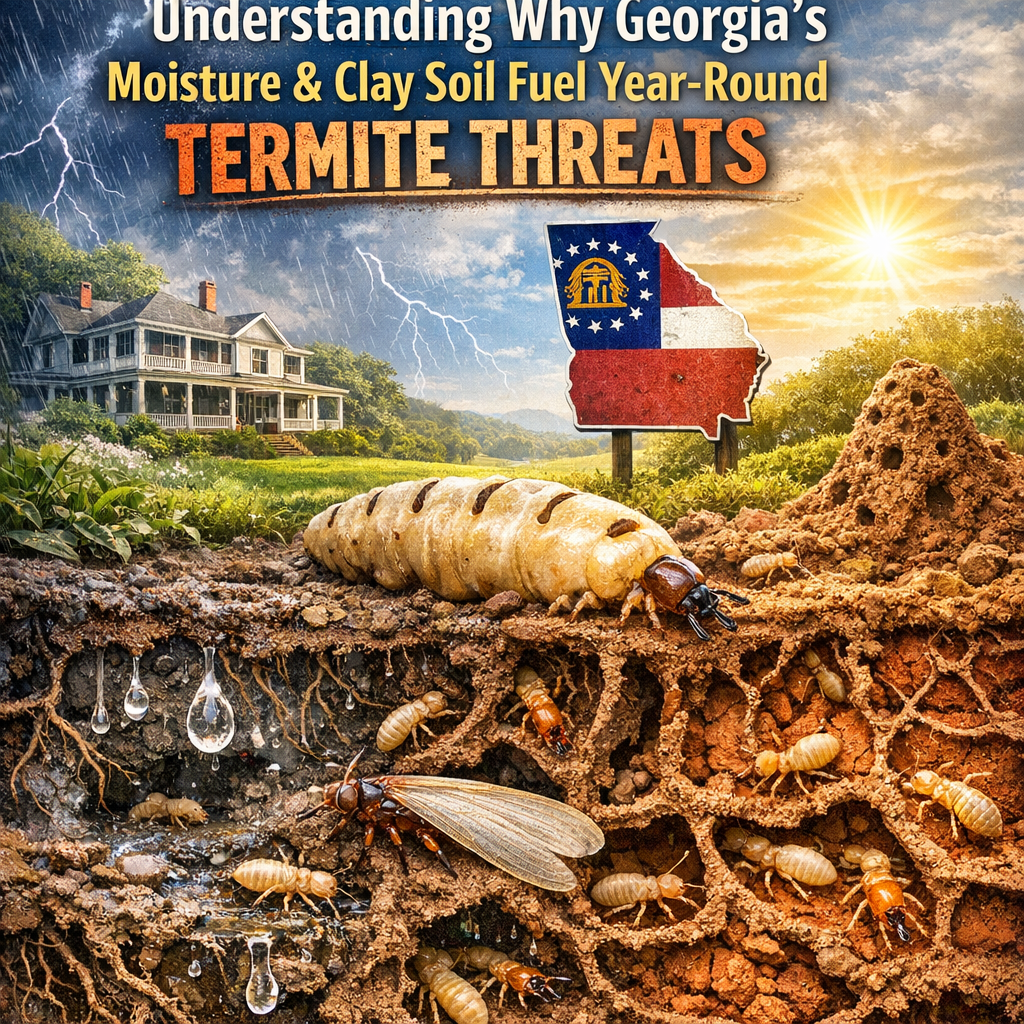
Understanding Why Georgia’s Moisture & Clay Soil Fuel Year-Round Termite Threats
Why Georgia’s Moisture & Clay Soil Make Termites a Year‑Round Threat
In the state of Georgia, homeowners and property managers need to be particularly vigilant about termites. The unique environmental conditions, characterized by high moisture levels and prevalent clay soil, create an ideal breeding ground for these destructive pests. This guide explains why Georgia’s conditions are perfect for termites, what this means for property owners, and how they can effectively protect their investments year-round.
The Perfect Environment for Termites
High Moisture Levels
Termites thrive in moist environments. Georgia’s humid subtropical climate, which brings significant rainfall and high humidity throughout the year, provides the moisture termites need to survive. The state’s weather not only helps termites live more comfortably but also allows them to rapidly expand their colonies.
Clay Soil: A Termite Haven
Clay soil, commonly found in Georgia, retains more moisture compared to sandy or loamy soils. This retention creates a damp environment conducive to termite life. Clay soil also poses challenges for the proper drainage of water, thereby creating puddles that further increase local humidity levels at the ground surface.
Year-Round Concerns
Unlike in some regions of the country where termites are dormant during colder months, the generally mild winters in Georgia allow termites to remain active and destructive throughout the year. This constant activity increases the risk of long-term damage, as termites continuously feed on wooden structures, sometimes undetected until significant harm has occurred.
Signs of Termite Infestation
Early detection can help mitigate the damage caused by termites. Here are some signs of termite infestation that property owners in Georgia should watch out for:
- Mud Tubes: These pencil-sized tubes next to building foundations are created by termites to provide moisture while they travel.
- Hollow Wood: Termites consume wood from the inside out, leaving behind a thin veneer of timber or paint. Tapping on wood that sounds hollow can indicate termite activity.
- Swarmers: The presence of winged termites or discarded wings inside the house often indicates an active termite infestation.
Preventative Measures
Given the year-round threat, property owners in Georgia should consider implementing the following preventative measures:
- Reduce Moisture: Ensure good drainage around the property, repair leaking faucets and water pipes, and use dehumidifiers in basements and crawl spaces.
- Regular Inspections: Schedule annual inspections with a professional pest control service to identify and treat early signs of termite activity.
- Physical Barriers: Install barriers such as termite shields that can help prevent termites from accessing wooden parts of your home.
- Chemical Treatments: Consider the application of termiticides, which are specially formulated chemicals to deter termites, around the perimeter of your home.
Conclusion
The combination of high moisture levels and clay soil makes Georgia a hotspot for termite activity, putting properties at constant risk of damage year-round. By understanding the environmental factors that favor termites and taking proactive steps to guard against them, homeowners and property managers can protect their investments from these voracious pests. Regular maintenance and vigilance are key in ensuring your property remains termite-free.